
Snap your tech.
Get stock cashback.
$STO7 contract · Robinhood Chain
0x123166aF606D72ba9F59e33D952642ADB1BACe45
Take a photo of your phone, laptop, or TV. See which companies likely made its parts and how much cashback you could get in company-linked tokens. No app or wallet needed to scan.
For best results, open stonkshot.wtf on your phone and use its camera. Keep the whole device you’re photographing in the frame.
Take a photo
Point your camera at your Mac, phone, TV, or another electronic device. You don’t need its box or barcode.
See who made the parts
AI identifies your device and lists the companies that likely made its parts. These are estimates, so some details may be wrong.
Preview your reward
See how a $1 reward would be split into small amounts of company-linked tokens on Robinhood Chain, a blockchain network.
Scanning is free. Rewards will have requirements.
When rewards launch, you will need $50 worth of $STO7, the project’s own token, in your crypto wallet when you take the photo. Holding alone pays nothing. You will also need to scan an eligible device.
This requirement is intended to make repeated claims from multiple wallets more expensive. It does not guarantee that abuse will be prevented.
Use a real photo of your device. Screenshots and product photos found online are not accepted. AI can still make mistakes. Planned reward limits include one claim per device per wallet and a daily payout cap.
You bought one product.
You paid a dozen companies.
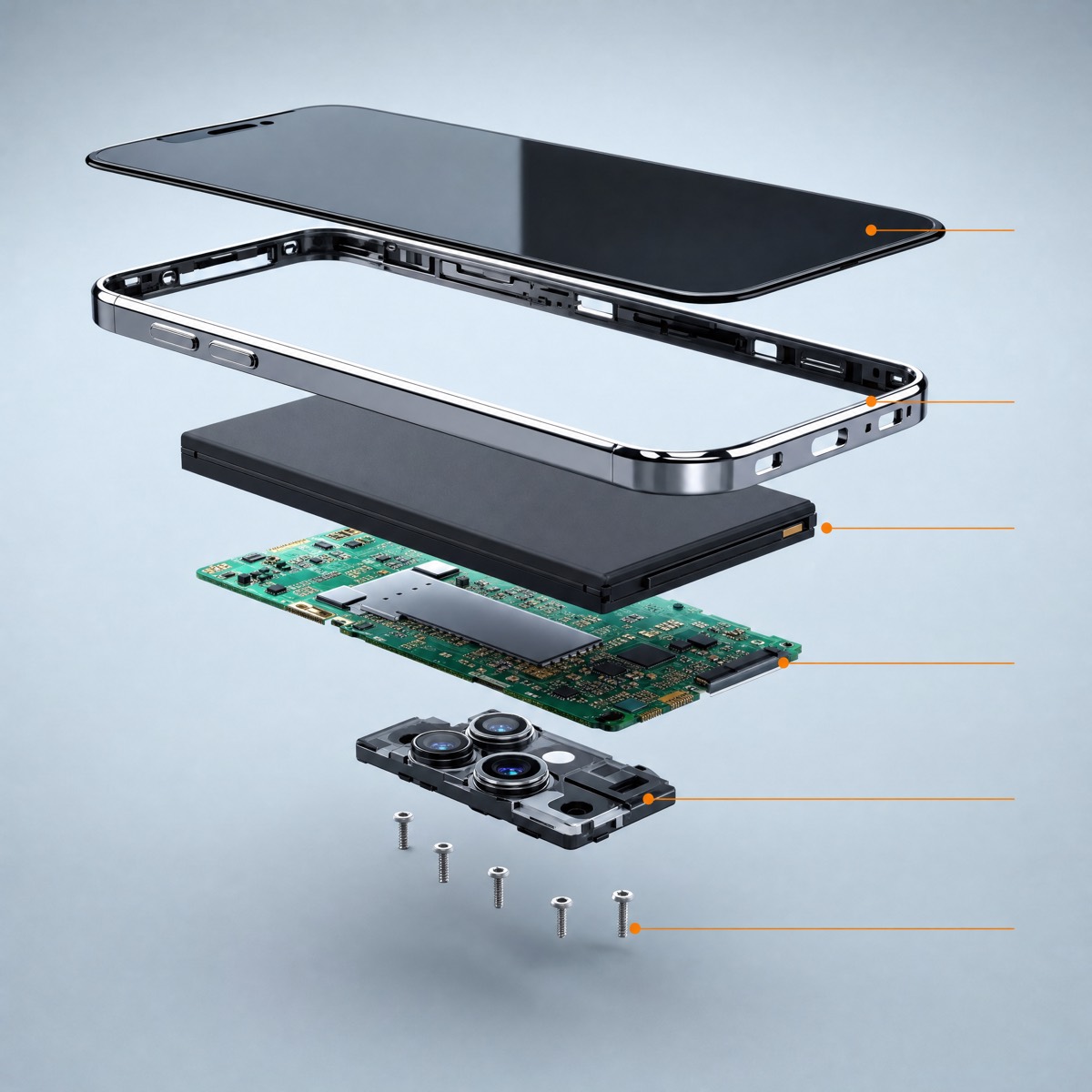
| Token symbol | Part or role | Estimated share of price | Reward preview |
|---|
Shares come from published teardown estimates and are rounded. The payout is policy v0: a fixed $1.00 per appraised object, split by each listed company's share of what you paid, minus the ones whose share lands under five cents. Opening Share on X triples the preview amounts for the same tokens.
Prices: loading from the chain…
Why some companies are named and not paid
Arithmetic, not policy. Measured on this chain on 3 September 2026: gas at 0.379 gwei, ETH at $2,509, so the first token in a payout costs $0.049 to move and every extra one in the same transaction costs $0.029. An appraisal pays $1.00. Sending a seventeenth of a cent of Corning glass would cost sixty times what the glass is worth, so we do not send it. Anything under five cents is named, marked, and left out.
Fee collection wallet: 0x9DA5b29A494576205691aD833caac2Bb22e50d17
Fees fund the vault.
The vault pays rewards.
Loading balances from Robinhood Chain…
Once the contract and token launch, we will send the fees we receive to the vault. The vault will use those funds to send rewards to eligible users. Rewards will depend on the funds available.
Tracked balances only: USDG, WETH and 16 stock tokens. Other assets may be held by this wallet. Values are token quantities, not a USD portfolio total.
How rewards will be funded
We collect fees
Fees will start coming in after the contract and token launch.
We send the fees to the vault
The vault holds the funds used to pay rewards.
The vault sends rewards
Eligible users receive rewards from the available funds when they scan a device.
Holding $STO7 alone does not earn rewards. You will need to meet the reward requirements and scan an eligible device.
In plain words.
A photograph is not proof. Anyone can shoot a screen, and no prompt will reliably catch it. The caps are the entire defence, and caps mean the reward has to stay small enough that nobody bothers gaming it.
The vault is a wallet we control. Version one has no contract: a server sees a valid appraisal and sends the transfer. That is custody, plainly. What you get instead of a promise is the address, the live balance and every payout as a public transaction you can count yourself.
Gas eats a real share of the reward, and the dust rule is how we keep it down. Between eight and twenty percent of every payout goes to the chain rather than to you. Push the reward lower and that fraction gets ugly.
The model will be confidently wrong. It will call a knock-off the real thing and put the wrong supplier inside the right object. Every appraisal ships with its confidence visible, and anything below the threshold pays nothing rather than guessing.
Most of your life is not on this chain. 193 stock tokens exist here. Sony, Samsung, Nestlé, Lego and the entire supermarket are missing, and several of the brands you care about are private companies no chain can list.
Not for US persons. Robinhood stock tokens are not available to them, and no amount of product design changes that.
Rewards depend on available funds. Fees will fund the vault after launch. If the vault does not have enough funds, it cannot send rewards. Fee income can vary, so payments may pause.
The gate is a ticket, not a yield. Holding $STO7 entitles you to nothing on its own. It only opens the door to an appraisal you still have to perform, once per address, for a reward worth about a dollar. Anyone buying the token expecting income from it has misread this page.
Use official addresses only. The $STO7 contract on Robinhood Chain is 0x123166aF606D72ba9F59e33D952642ADB1BACe45. Do not send funds to addresses shared by impersonators.
© 2026 Stonkshot · not investment advice · built on Robinhood Chain
not affiliated with Robinhood Markets, Apple, OpenAI, Tesla, Sony or any brand named here